
Outdoor fitness equipment · Cornwall
Outdoor gym inspections
Moving parts, bearings, anchorage and pinch and crush points inspected to BS EN 16630 — a different standard from play equipment, and a different set of failure modes.
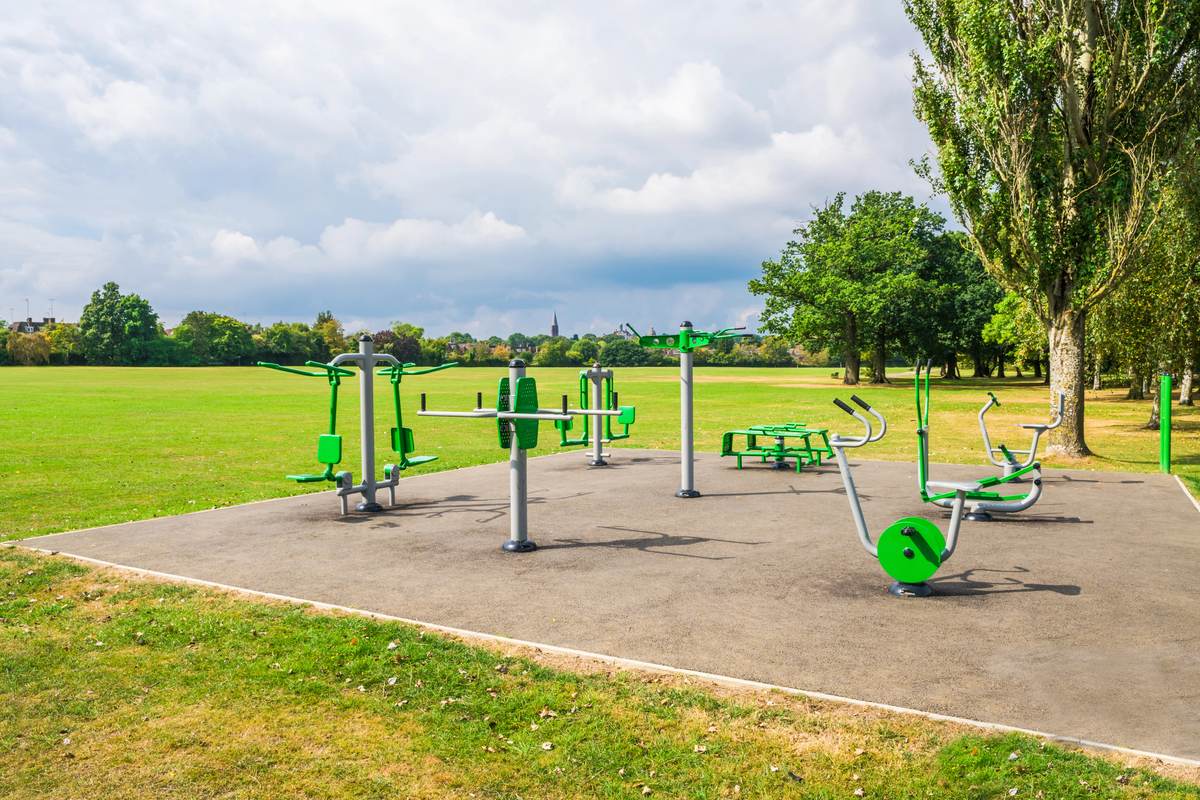
Outdoor gyms are governed by BS EN 16630, not BS EN 1176, and that is more than a paperwork distinction. This is adult equipment with moving parts under load, which means the risks are mechanical — bearings, pivots, guards and anchorage — rather than the entrapment and fall-height risks that dominate a playground inspection.
It is also equipment that children use whatever the signage says. That is a foreseeable use on a public recreation ground, so it gets assessed and reported as one rather than dismissed as misuse.
What the inspection covers
- Bearings, pivots and moving joints — play, seizure, wear and noise under load
- Pinch, crush and shear points, including guards that have been removed or damaged
- Anchorage and foundations, with ground-level movement checked directly
- Load-bearing welds, frames and uprights for corrosion and section loss
- Handgrips, seats, footplates and pads — security, wear and slip resistance
- Surfacing and the free space around each unit, to the BS EN 16630 requirement
- Instruction signage: present, legible and matching the equipment installed
Where outdoor gyms fail
Bearings and pivots
The parts that define this equipment are the parts that wear out. Play develops gradually, then the unit either seizes or the joint starts loading in a direction it was never designed for.
Missing guards
Covers over pivots and chains get vandalised or removed for maintenance and not replaced, exposing a crush point on equipment that children will climb on regardless of the sign.
Anchorage movement
Repeated dynamic loading works foundations loose over years. It shows first as slight movement at ground level, which is easy to miss and simple to check properly.
What you get back
- Every unit listed individually, with each defect photographed and risk-rated
- The BS EN 16630 clause cited against each finding
- Proprietary parts identified by name where a manufacturer order is needed
- Recommended action written so any contractor can price it without attending
- Delivered within 48 hours — high-risk findings phoned through the same day
Scope
Routine and operational inspections are carried out under our own RPII registration. The independent annual main inspection requires the separate RPII Annual grade, which we do not hold — we arrange it with an Annual-grade inspector from a separate practice and invoice it as one job.
Across Cornwall from a base near St Austell, plus the Tamar border into Devon as far as Launceston, Saltash and Torpoint. Outdoor equipment only.
All inspection services · MUGA inspections · Repairs · Ask for a quote
Questions
Frequently asked
Which standard applies to outdoor gym equipment?
BS EN 16630 covers permanently installed outdoor fitness equipment. It is a different standard from BS EN 1176, with different requirements — outdoor gym kit is designed for adults, so the entrapment and fall-height rules that govern play equipment do not simply carry across.
Ours is next to the play area. Is it inspected the same way?
It is inspected on the same visit but against BS EN 16630 rather than BS EN 1176. That distinction matters when children use adult equipment, which they invariably do — we assess that as a foreseeable use and report on it.
How often does outdoor gym equipment need checking?
The same three-tier rhythm applies. The difference is that moving parts and bearings deteriorate on their own schedule regardless of season, so the operational inspection is where most defects on outdoor gyms are found.
Do you repair outdoor gym equipment?
Yes, within our trade — fixings, bearings, guards, anchorage and surfacing, quoted item by item against the report. Where a proprietary part is needed we identify it in the findings so it can be ordered from the manufacturer.